

Why Land Value Matters When You Buy Residential Plots in Pune
Unlike an apartment, raw land doesn't depreciate with usage — its value is shaped almost entirely by location, infrastructure, legal clarity and the surrounding community. That's exactly why serious buyers spend more time evaluating plots than flats. If you're comparing options before you buy residential plot in Pune, understanding these value drivers will help you separate a genuinely future-proof investment from a plot that simply looks affordable today.
1. Location and Connectivity to IT Hubs and Highways
Proximity to employment corridors remains the strongest predictor of land appreciation. Plots within easy reach of the Mumbai–Bengaluru Highway, Hinjawadi IT Park and established neighbourhoods like Kothrud tend to see consistent demand from both end-users and investors. This is one reason residential plots in Bavdhan Pune are increasingly compared favourably against eastern micro-markets such as Wagholi, which still face infrastructure gaps despite lower entry prices.
2. RERA Approval and Clear Legal Titles
Legal clarity is non-negotiable. Land with a confirmed NA (Non-Agricultural) status, clean title chain and RERA registration removes the uncertainty that drags down value on unverified parcels. Buyers actively pay a premium for documented, dispute-free residential land for sale in Pune because it protects both their investment and their ability to resell or mortgage the property later.
3. Gated Community Infrastructure and Planning
Organised, master-planned layouts consistently outperform scattered, unplanned plots. Gated community plots in Pune typically include internal roads, drainage, power connections and defined common areas from day one — infrastructure that individual landowners on standalone plots would otherwise have to arrange themselves. That readiness directly supports faster appreciation and easier resale.
4. Plot Size, Density and Layout Design
Low-density layouts with a healthy land-to-family ratio tend to retain exclusivity, which in turn supports stronger long-term pricing. A community with a capped number of plots and generous open space — rather than maximum unit density — signals planning discipline that buyers recognise and reward over time.
5. Green Cover and Eco-Sensitive Planning
Sustainability features are no longer a soft selling point; they materially affect value. Rainwater harvesting, grey-water reuse, storm-water management and substantial tree cover reduce a community's long-term operating and environmental costs while improving everyday liveability — both of which buyers factor into what they're willing to pay for a plot.
6. Proximity to Schools, Hospitals and Daily Conveniences
Social infrastructure quietly drives a large share of appreciation. Areas with easy access to reputed schools, hospitals and retail — without the congestion of core commercial zones — strike the balance most end-users are searching for. Western suburbs like Bavdhan score well here precisely because they sit close to established city infrastructure while still offering room to breathe.
7. Reputed Developer Track Record
Brand assurance lowers perceived risk, and lower risk supports higher land values. Projects backed by developers with a verifiable history — decades of delivered projects, transparent documentation and recognised industry awards — command stronger buyer confidence than land sold by fragmented, individual owners. It's a major reason premium villa plots in Pune from established names continue to outperform comparable unbranded parcels.
8. Topography — Hillside and View-Facing Plots
Land with natural elevation, hill views or a forested backdrop carries a structural advantage that flat, featureless parcels simply cannot replicate. Hillside topography also tends to limit future high-density development nearby, which helps protect privacy and views — both strong long-term value drivers.
9. Amenities and Lifestyle Infrastructure
Clubhouses, landscaped trails, sports areas and dedicated pet parks may seem like lifestyle extras, but they meaningfully shape resale value. Communities that invest early in shared amenities tend to attract a more committed buyer base, which keeps demand — and prices — stable even during slower market cycles.
10. Future Development Potential and Appreciation Headroom
Land within city limits but with genuine constraints on future development — due to zoning, hill-slope regulations or limited remaining inventory — tends to appreciate faster simply because supply cannot expand to meet demand. This scarcity factor is increasingly central to how buyers evaluate gated community villas in Pune before committing.
How Kekarav, Bavdhan Hills Checks All These Boxes
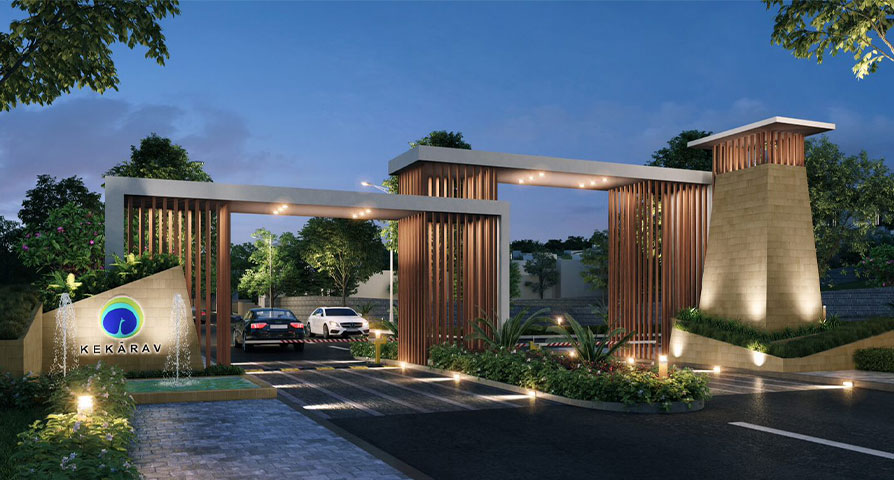
Set across 45 acres with only 300 villa plots, Kekarav was planned around almost every factor listed above. It sits within PMC limits yet just minutes from the Mumbai–Bengaluru Highway, Chandani Chowk and Hinjawadi IT Park. The project carries MahaRERA registration across its sectors, follows eco-sensitive planning with rainwater harvesting and grey-water reuse, and is built on naturally elevated, hill-facing land. Add a clubhouse, landscaped trails, sports areas and Pune's largest pet park, and it becomes clear why Kekarav is frequently used as the reference point when buyers evaluate residential land for sale in Pune.
If you're comparing options, it's also worth reading why buying residential plots in Bavdhan, Pune is often a stronger long-term choice than flats, and exploring further insights on the Kekarav resources and blog section.
Final Thoughts
Land value in Pune isn't shaped by a single factor — it's the cumulative effect of location, legal clarity, planning quality, sustainability and developer credibility working together. Before you commit to any residential plot, it's worth measuring it against the ten factors above. Projects that get most of them right, like Kekarav in Bavdhan Hills, tend to be the ones that hold their value when the market shifts and continue appreciating long after possession.